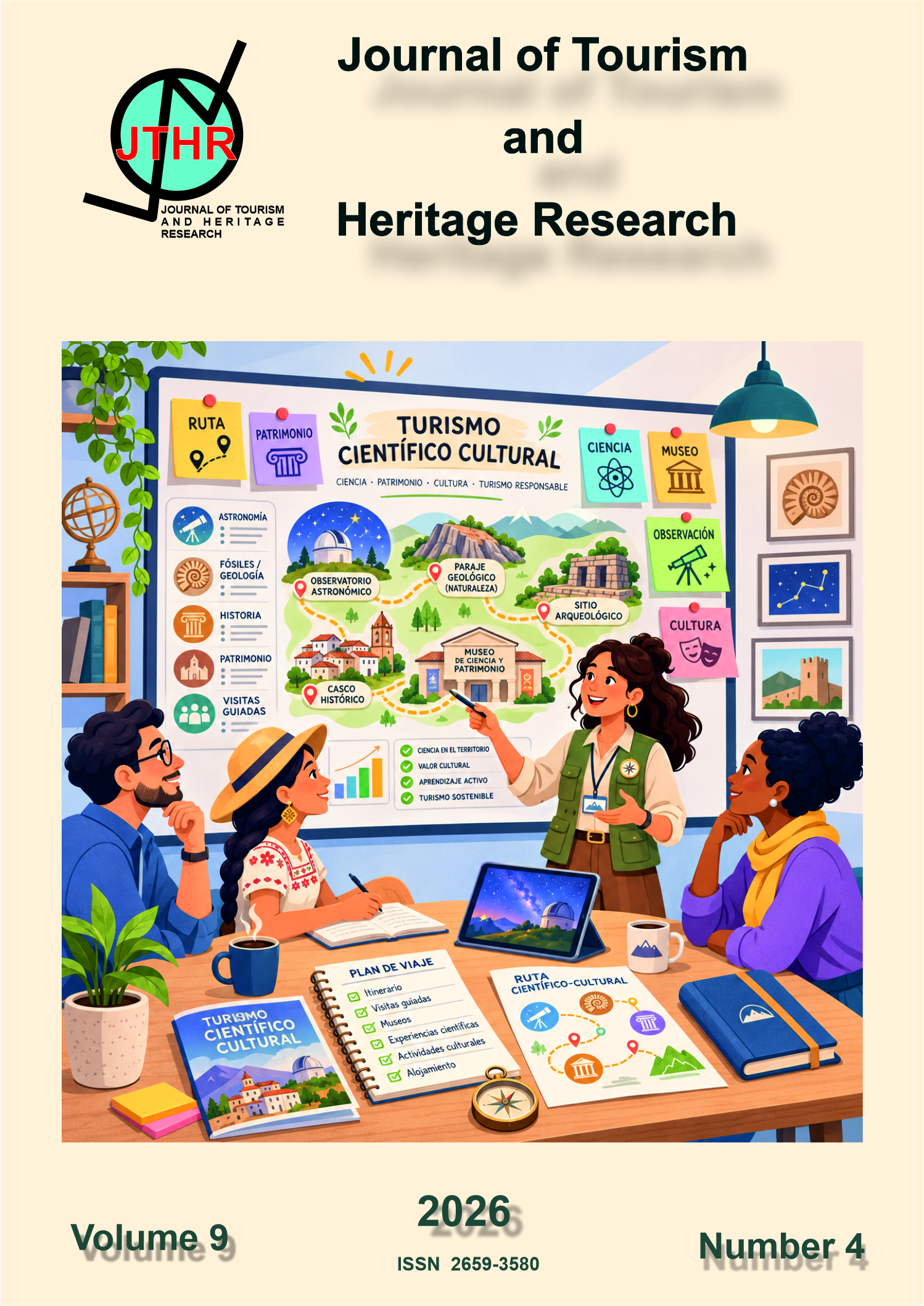
Analysis of Handcrafted Products from the “Pueblo Mágico” of Tapijulapa; Tacotalpa Municipality, Tabasco, Mexico
Abstract
This article aims to examine the handicraft products produced in the Magic Town of Tapijulapa in order to highlight its traditional crafts, gastronomy, natural attractions, and architecture. A qualitative methodology with a descriptive, exploratory, and explanatory approach was employed, based on the analysis of primary sources. The findings indicate that the town's cultural and natural heritage represents an important asset for sustainable tourism development. It is concluded that Tapijulapa's traditional cuisine, handicrafts, and natural attractions have significant potential to strengthen local and regional tourism. However, to consolidate its tourism potential, it is essential to implement public policies and sustainable strategies that improve infrastructure, promote community training, and position Tapijulapa as a leading tourist destination in southern Mexico.
References
Código San Luis. (2025, 31 julio). Mone de cerdo, el tesoro típico de Tabasco.
Código San Luis. https://www.codigosanluis.com/mone-cerdo-tesoro-tipico/
Estañol, M. A. (2023). Local tourism as a boost to the economy of the magical town, Tapijulapa of the municipality of Tacotalpa; with a gender perspective. Journal of Tourism and Heritage Research, 6(2), 83–90.
Feria Maestros del Arte. (s. f.). Técnicas tradicionales de fibras vegetales. https://feriamaestrosdelarte.com
Gran Turismo. (2017). Tapijulapa, tradición artesanal. https://www.granturismo.com.mx
Gobierno del Estado de Tabasco. (s. f.). Tapijulapa: naturaleza y biodiversidad. Gobierno del Estado de Tabasco. https://tabasco.gob.mx/tapijulapa
Gobierno del Estado de Tabasco. (2020). Artesanía y transmisión de saberes tradicionales. https://tabasco.gob.mx
Gobierno del Estado de Tabasco. (2023). Artesanos de Tapijulapa y diversificación productiva. https://tabasco.gob.mx
Juarez. (2025, 29 mayo). Tradición y sabor; Tapijulapa festeja 15 años con su exquisita comida típica. Tabasco HOY. https://www.tabascohoy.com/tradicion-y-sabor-tapijulapa-festeja-15-anos-con-su-exq uisita-comida-tipica/ Tabasco Hoy
Ortiz, D. (2014). El mutusay: identidad y economía local en Tapijulapa.
Palma, F. (2021, 23 mayo). Tejidos únicos con raíz del motusay en Tapijulapa, Tabasco. México Desconocido. https://share.google/z3OTNZ61jaPudVNCo
Secretaría de Turismo. (2019). Tapijulapa, Tabasco. Gobierno de México. https://www.gob.mx/sectur/articulos/tapijulapa-tabasco
SinEmbargo. (2016, 10 de octubre). La artesanía del mutusay en Tabasco. https://www.sinembargo.mx
Tabasco Trends. (2025). Diseño artesanal y fibras vegetales en Tapijulapa.
Visit México. (s. f.). Tapijulapa. Consejo de Promoción Turística de México.
https://visitmexico.com/es/destino/2075/tapijulapa citas bibliográficas objetivo 2

This work is licensed under a Creative Commons Attribution 4.0 International License.
1.The works published in this magazine are subject to the following terms: Tourism Research Association (the publisher) preserves the patrimonial rights (copyright) of the published works, and favors and allows the reuse of them under the license of use indicated in point 2.
© Investur, 2017
2.The works are published in the electronic edition of the magazine under a Creative Commons Attribution-NonCommercial-NoDerivative 3.0 Spain (legal text) license. They can be copied, used, disseminated, transmitted and publicly displayed, provided that: i) the authorship and the original source of their publication (journal, editorial and URL of the work) are cited; ii) are not used for commercial purposes; iii) the existence and specifications of this license are mentioned.

3. Self-file conditions. Authors are allowed and encouraged to disseminate electronically the pre-print versions (version before being evaluated) and / or post-print (version evaluated and accepted for publication) of their works before publication, since it favors their circulation and earlier dissemination and with it a possible increase in its citation and scope among the academic community.